ksixty
@k60@soundhunte.rs
22 following, 8 followers
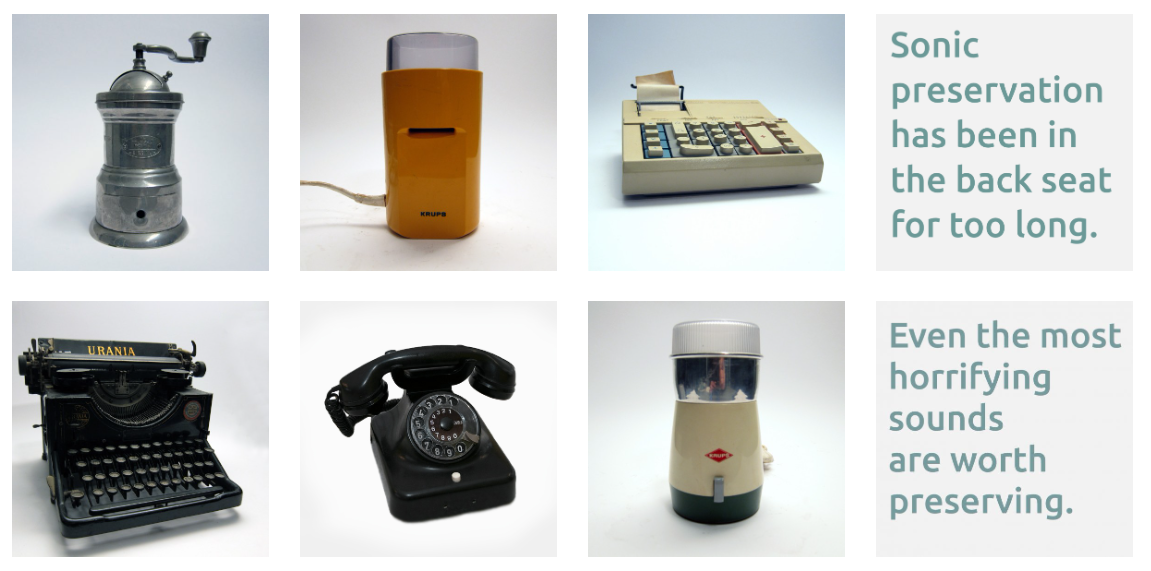
https://www.conservethesound.de/
For the tech folks. How do you usually interact with Git? (Please share this poll to increase its reach!)
| Command Line: | 394 |
| GUI: | 77 |
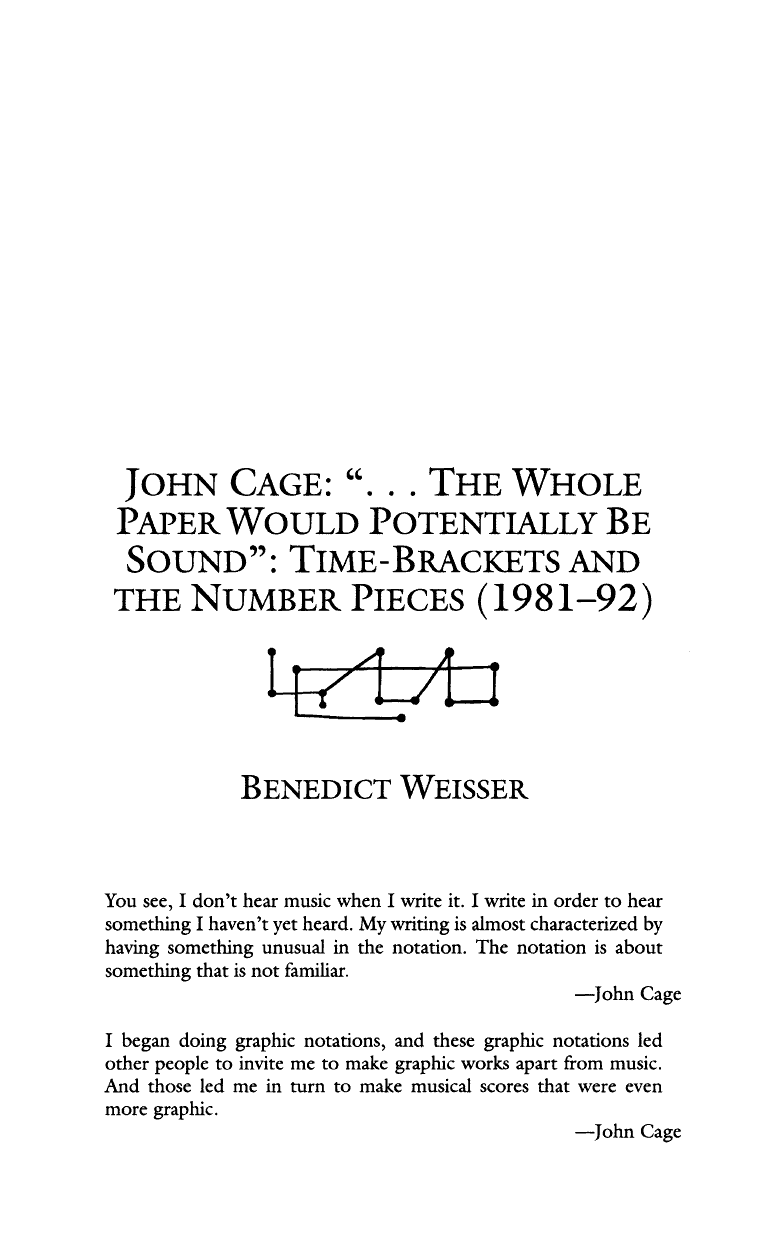
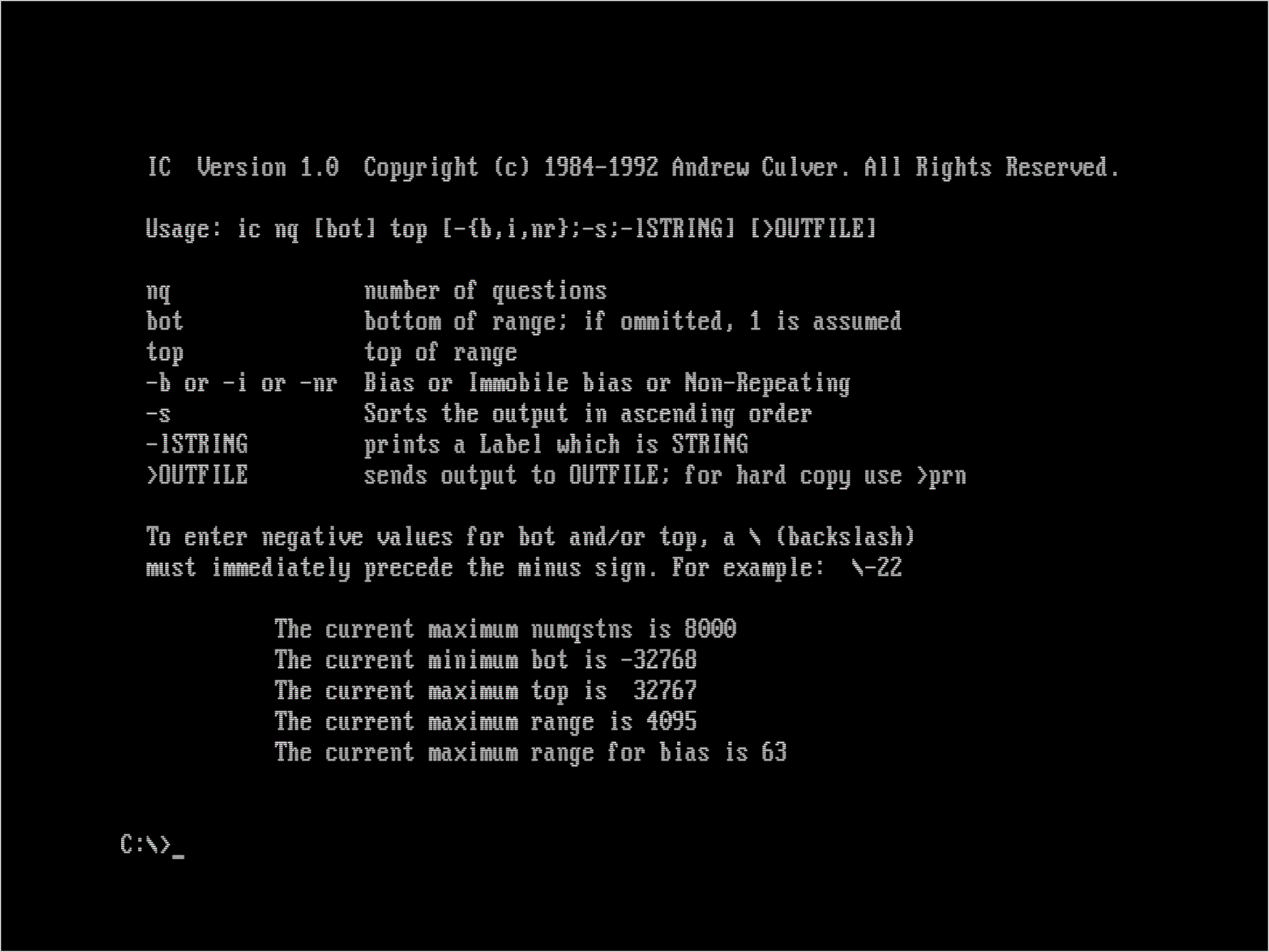
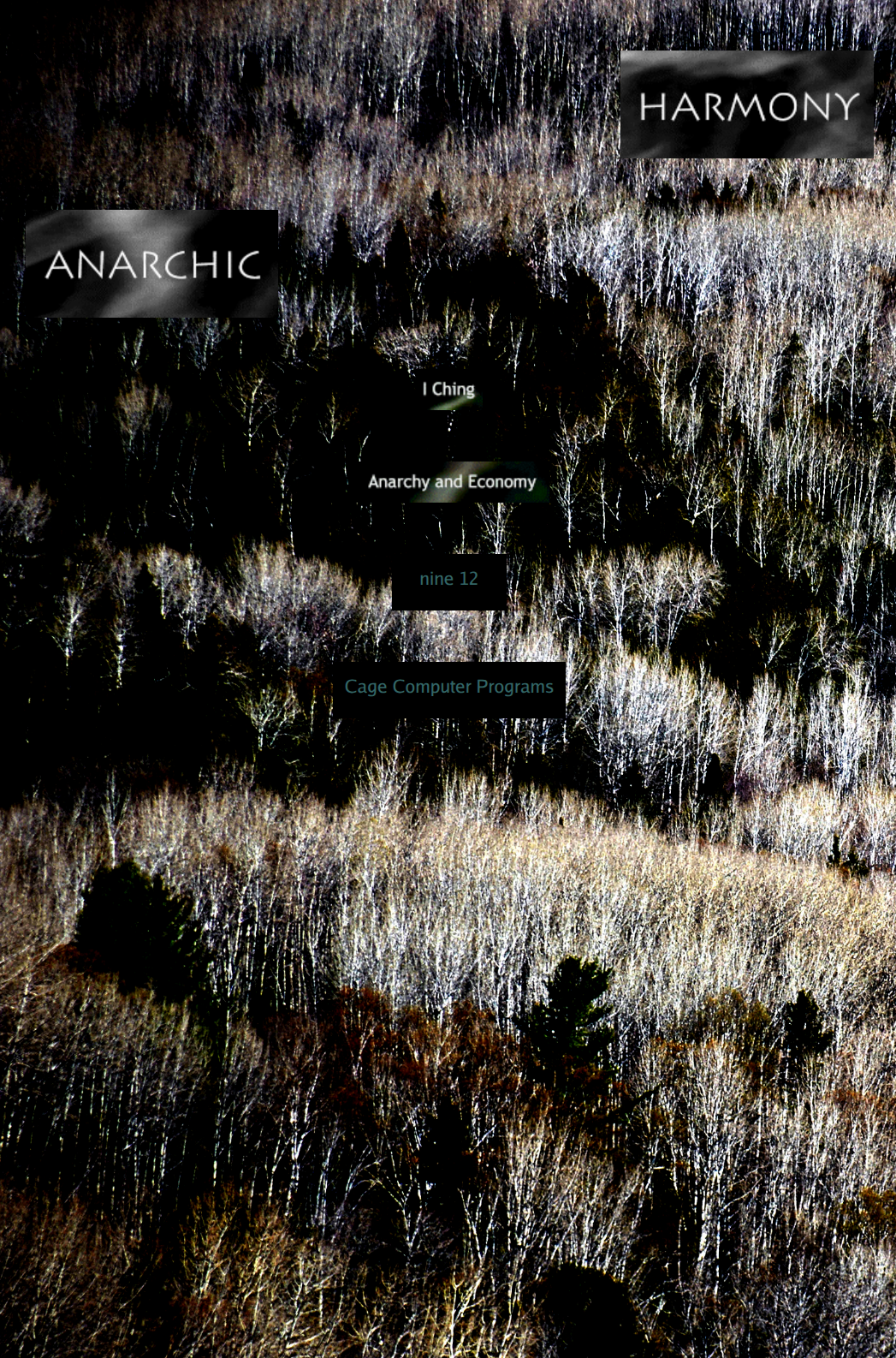
See: https://anarchicharmony.org/People/Culver/CagePrograms.html
(On the contrary, when I think about reviving my school projects from around 7–10 years ago—node.js and all that—my head hurts.)
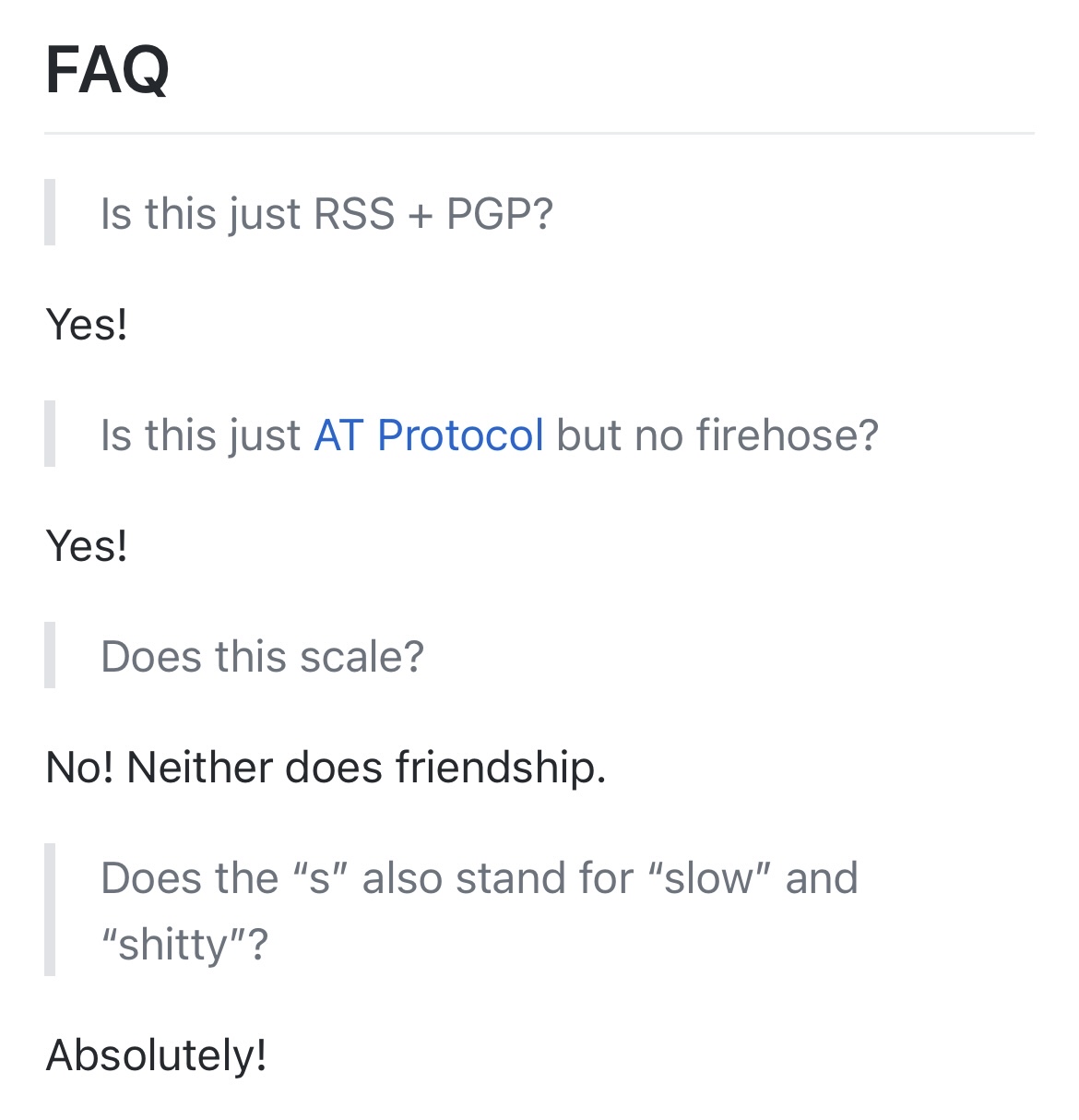
Nothing really ever scales or should be scaled, I believe. “Machine were mice and men were lions once upon a time. But now that it’s the opposite, it’s twice upon a time!”.
(Quoted from: soundhunte.rs/mu/k60/acad/moondog/moondog/02_Stamping_Ground.mp3)
Found in the documentation of the s@-protocol, a primitive technology for bloging, socially. http://satproto.org.
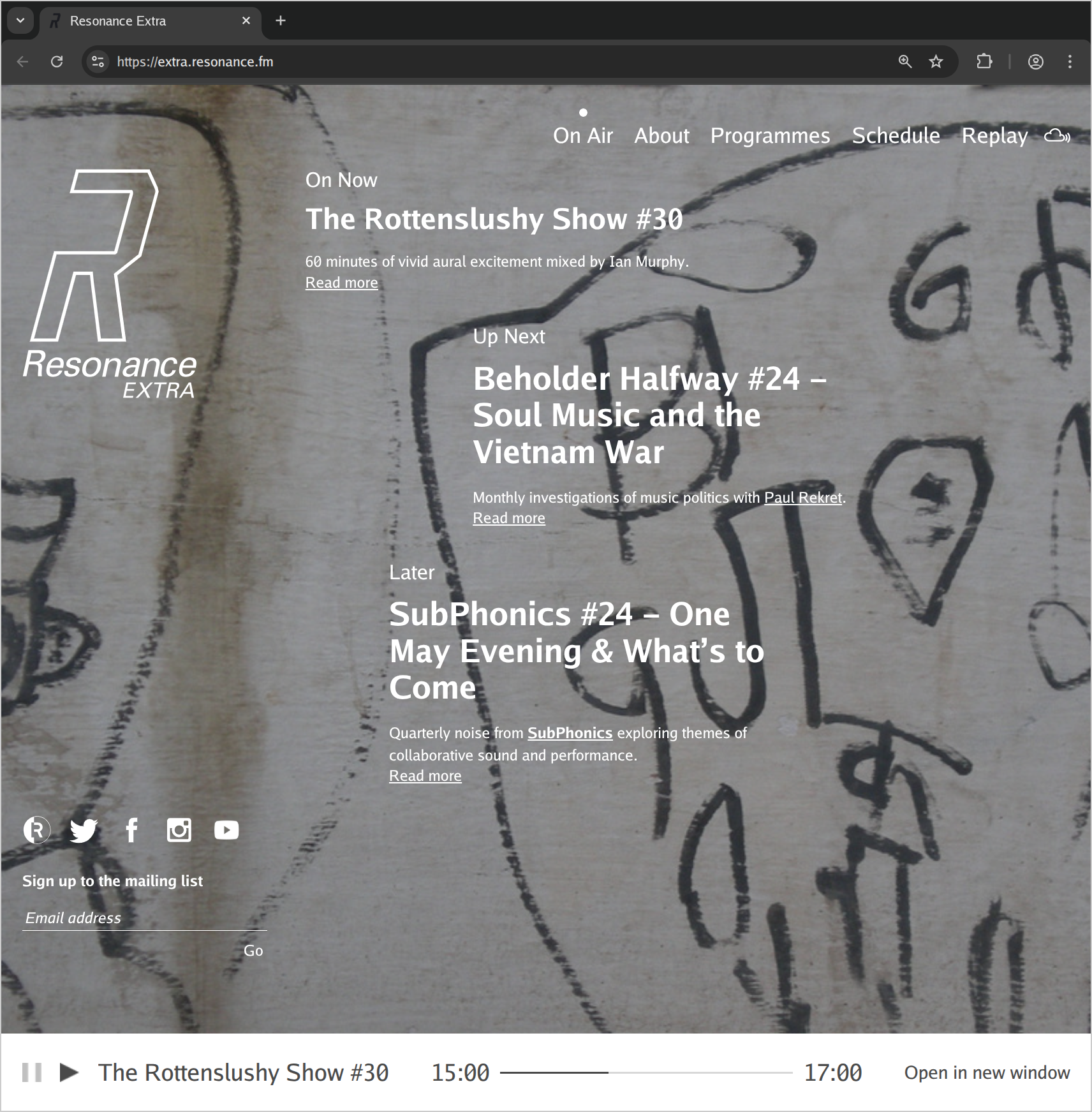
direct stream: http://stream.resonance.fm/resonance-extra
plays radio art / experimental music that is pleasant & my concentration vibe. also the site is beautifully done.
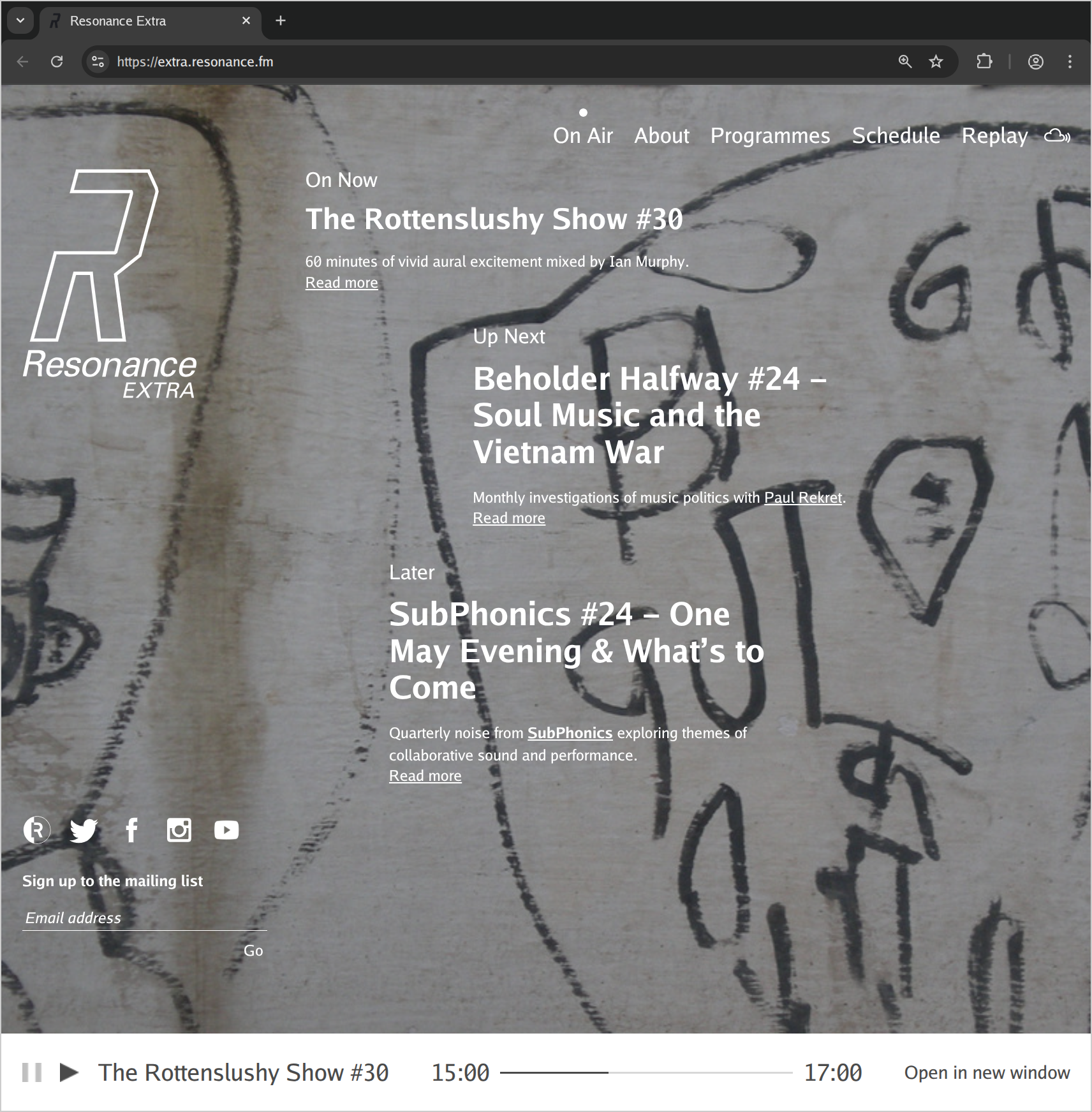
direct stream link: stream.resonance.fm/resonance-extra
plays ambient / experimental / somewhat background music that is pleasant and good for focus. also the site is beautiful.
@hi I've got a T14s gen 3 (AMD), and I'll be holding on to it for as long as I possibly can.
i don't know what happened recently, but all new thinkpads got that camera bump...
#thinkpad classic look is gone completely
capitalists: "without a profit motive, nobody would do anything. society would collapse."
my friends & acquaintances: "I implemented a SPARC emulator in pure CSS"
this concerns most kinds of doing.
been to a music improvisation session tonight, seen how people exist through the unexpected they have brought on themselves, willingly. great fun!
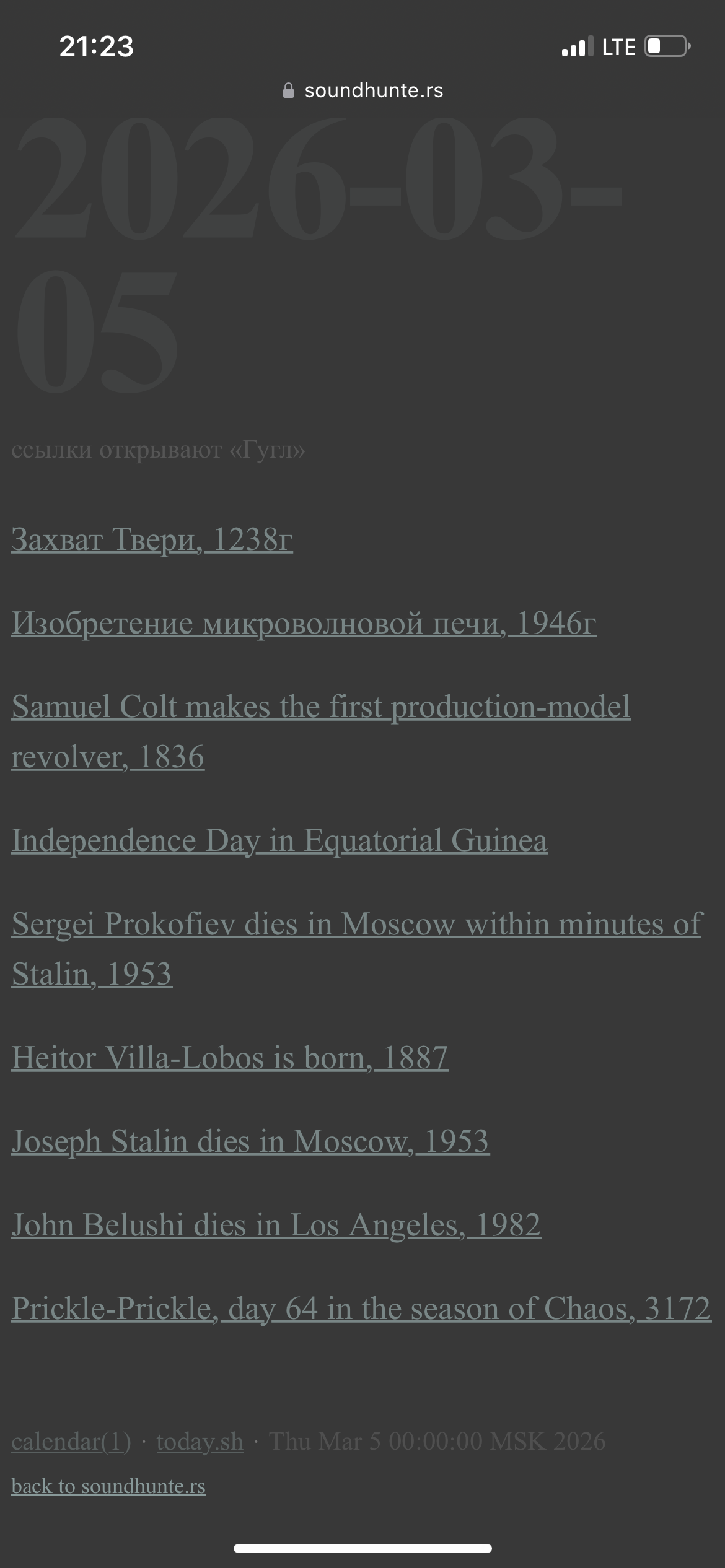
the page shows data from calendar.russian, .computer, .history, .holiday, .discord and .space calendars.
each entry has a link that goes to search.
the service lists events for today only. and tomorrow it will list events for tomorrow.
you can make it your homepage and see what today brings, every day, and easily search that, too.
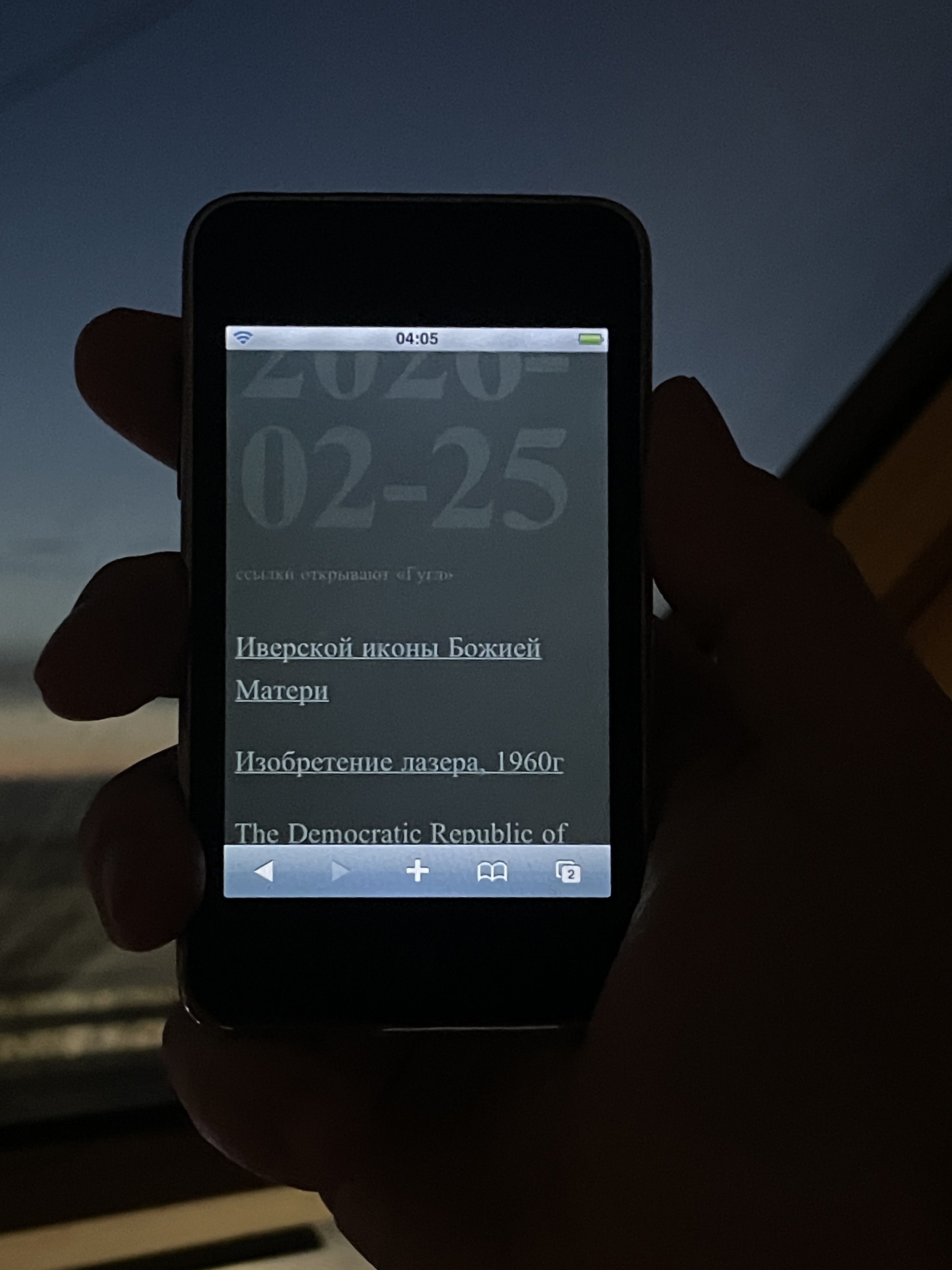
I like my little garden with pets, not cattle, and with interfaces that are visible and distracting—and the best part’s that it all fits in my head nicely.
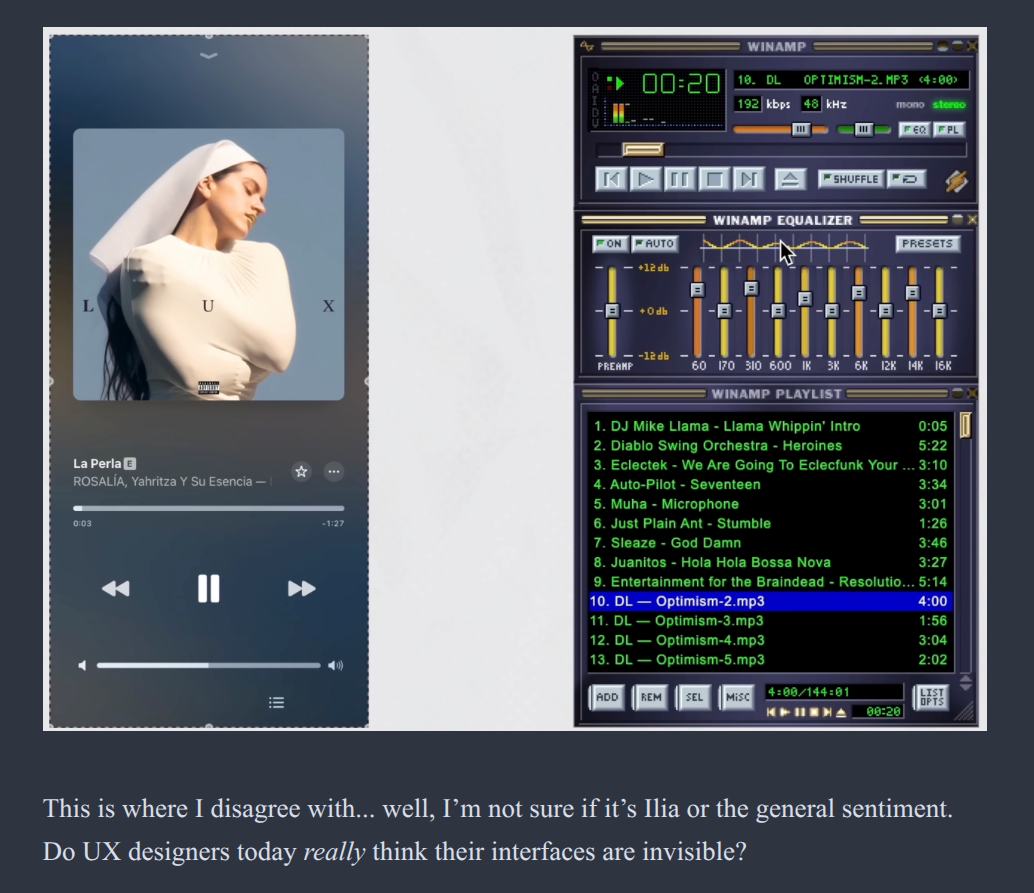
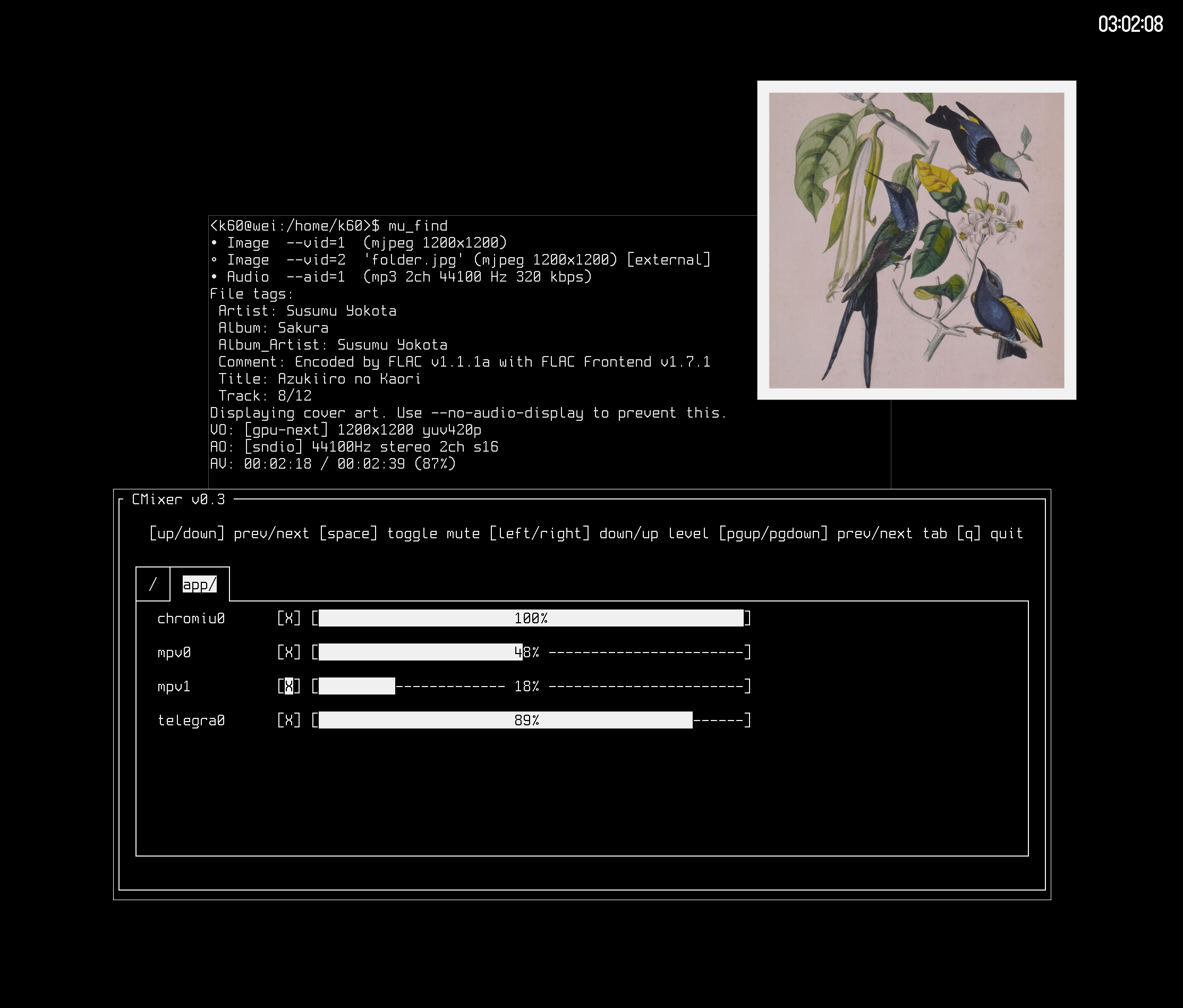
So, on the surface [an interface] looks cleaner, but in my mind Apple Music is a lot more dirty, confusing, and disorienting.I like simple interfaces. picture two: ncmpcpp on my laptop, controlling the mpd server on the studio computer that is ultimately responsible for what comes through my beloved stereo system at all times.Like an attractive sociopath.
the problem is this kind of simplicity is actually simple only when you learn how to work the interface. whereas the interface of Apple Music requires no prior learning. and learning is unacceptable for things that are meant for the greater audience. right?
on the other hand, driving an automobile requires a license, maybe there ought to be one for computing, too?
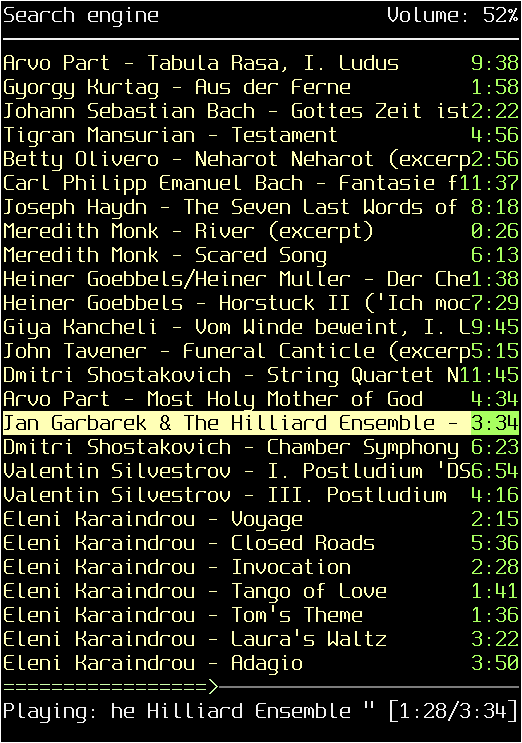
https://arxiv.org/pdf/2511.17516
TLDR: tested on a Dell XPS 13 (single screen, Linux), dynamic WM was ~38% faster for common tasks.
My take: tiling really shines on a single monitor — the tag/workspace system lets you mentally map your work and forget about window hunting. With 2 monitors the advantage narrows since screen space.
oh, the first one is merely a brief description, not really a manual per se... but “if the info and stat programs are properly installed at your site, the command info coreutils aqstat invocationaq [sic] should give you access to the complete manual!”
even though there are examples of first-class support in some Linux distributions (e.g. Void Linux maintainers seem to care a lot about patching in sndio support in many applications), sadly on Alpine it’s this: https://gitlab.alpinelinux.org/alpine/aports/-/issues/13355.
the thing I liked while daily driving OpenBSD about sound was that it just worked. can’t say the same about the ALSA/Pulse/PipeWire mess—I've had my sound broken by updates thrice since August, and I’m using PipeWire, which is the least insane of the three... wish more people would care about even giving a shot to simple, robust and sane-ish solutions.
Ecasound is a software package designed for multitrack audio processing. It can be used for simple tasks like audio playback, recording and format conversions, as well as for multitrack effect processing, mixing, recording and signal recycling
The basic working principle of ecasound is similar to the widely used gdb (software debugging) and mysql (database admin) tools. Ecasound allows the user to perform most common tasks directly from the terminal consolenow I want to try this so much, hoping there’s a guide or a book or something.
Once men turned their thinking over to machines in the hope that this would set them free. But that only permitted other men with machines to enslave them.
― Frank Herbert, Dune, ca. 1965
Когда я храню пост, я тщеславлюсь; когда же, для утаения подвига моего, скрываю его – тщеславлюсь о своем благоразумии. Если я красиво одеваюсь, я тщеславлюсь, а переодевшись в худую одежду, тщеславлюсь еще больше. Говорить ли стану – тщеславием обладаюсь; соблюдаю молчание – паки оному предаюсь. Куда сие терние ни поверни, все станет оно вверх своими спицами.Преподобный Иоанн Лествичник.
(via https://t.me/a0xRef/249)
Concord, CA, April 22, 1999: 32 Dual-Processor FreeBSD systems were used to generate a large number of special effects in the cutting edge Warner Brothers film, The Matrix.
the crowd it attracts: [the crowd]
now: things you don’t
try it
here's the script: https://soundhunte.rs/k60/?doc=snac2tg.sh
invoke it like this: inotifyd snac2tg /snac/user/me/public:ny
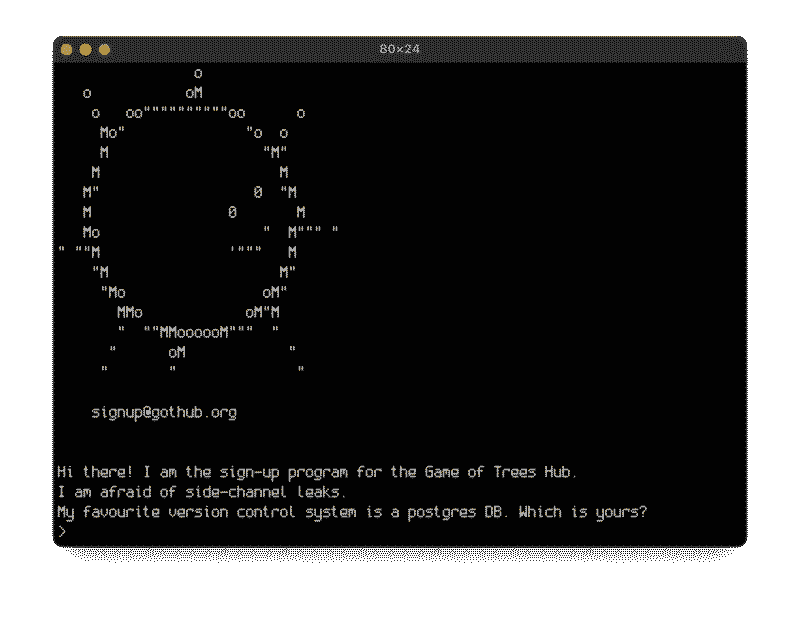
step one. you need a compiler. thanks to @boriel@mastodon.social, there is ZX Basic that just works. it's awesome. you just do ../zxbc.py -f tap -a --BASIC jingle.bas and that's it.
step two. you need an emulator. yay—I thought—#retroarch has libretro-fuse that's even packaged for Alpine. it worked strange, displayed a lot of weird stuff and looked too complicated. so I resorted to JSSpeccy3, which runs in a browser. it was okay, but I got tired of switching between the compiler and my browser, uploading the file, checking it out, etc.
I gave retroarch one more shot, spent some time researching why on earth the audio was not working, even though the retroarch menus had it. one strace later it became clear that libretro-fuse does not use retroarch's sound system, but the ALSA sequencer. okay, modprobe snd_seq, done. now i can iterate much faster, by compiling my program and loading it into the emulator with a single command. neat!
step three. you need a way to convert your tape image to an audio file. the original FUSE emulator (not to be confused with FUSE-the-filesystem-in-userspace-thing! damn it, google) contains some utilities, and among them there is tape2wav, which does exactly what you need. to get tape2wav you just need to compile libspectrum, then fuse-utils. sources are available for both, it's really almost as simple as: ./configure && make && doas make install. alas, tape2wav won't build without a warning, if your system's libaudiofile is broken. Alpine's package seem to be exactly this, so I had to check out the original source code, figure out the exact way to build the thing, since READMEs were updated almost never it seems, and, finally I've built everything and had my tape2wav working.
step four. you may want to check that your audio file can be loaded correctly. I thought the audio2tape program from the same fuse-utils suite would do exactly that. alas, it does not support the turbo-encoded tapes that it's sibling tape2wav produces, and there's no way to turn the turbo encoding off in the latter. the retroarch's libretro-fuse won't load wav files either, it just ignores them. so I thought to give the original fuse a shot. after doing apk add gtk+2.0-dev and having some pleasant nostalgic flashbacks, fuse compiled successfully, and — finally — i got my wav played and loaded.
step five. you may want to make the audio file sound like a real tape recording. for this I went to my studio computer, loaded the wav in Logic Pro, dubbed the file along a sample of a running reel-to-reel motor (I know, right), added the flutter effect to make pitches a bit wobbly just like they are on some bad tape recordings, finally normalized the volume et voila. one last thing was to make sure FUSE would load the resulting file. which it did!
step six. you may want to compress the audio. the announcement is to be published on the web. so the 11 megabyte wav was no okay. converting it to MP3 completely ruins the data integrity, no matter what parameters you use. so did changing the sample rate. so did mono conversion. so did channel remapping for some reason too.
so I had to use #FLAC. doing pcm_s16 → pcm_s8 before converting the file to FLAC makes the file almost three times smaller, and 10x smaller when compared to the original wav. and by the way, FLAC is supported by all major web browsers, even the worst browser ever, i.e. iOS Safari would play it just fine, or so I'm told by the can-i-use portal.
soon the announcement will go live, and I'll post the result here.
it was fun! nothing much, really, but a deep dive nonetheless.
no-one ever now: [the same thing].
then i went back to my studio and spent some time with a LimeSDR, trying to tune in on to XXX's ATIS broadcast via an antenna that looked more like a bunch of barbed wire than anything else. finally, it worked. the snow on the window pane added to the distortion, and not only had I have a nice listening session, but some recorded material for future projects, too. pure bliss.
thinking about making this a tradition from now on.
last year's novelty: being sober and happily driving myself home afther the party.
this year: no more parties.

![[?]](https://soundhunte.rs/@/k60/s/aa3dcd506bb2a1cfe561b275ec2ba135.jpg)
![[?]](https://mastodon.acm.org/system/accounts/avatars/109/592/938/469/130/254/original/c58c3c3e92738dbb.jpg)
![[?]](https://snac.9front.club/thedaemon/s/avatar-cfa575bf96a962dfe1cf0ee5f7779d6a.png)
![[?]](https://romanzolotarev.com/logo.png)
![[?]](https://media.hachyderm.io/accounts/avatars/114/400/799/718/426/642/original/72eb19a91e976d95.jpg)
![[?]](https://cdn.unstable.systems/accounts/avatars/108/987/480/557/680/178/original/27d79c514ca00faf.jpg)
![[?]](https://media.freespeechextremist.com/rvl/full/28636278fa1aa542d362569cd7ca91b9703e31a52549ebb960bd40e403bd2e51?name=blob)
![[?]](https://snac.bsd.cafe/r1w1s1/s/avatar-a407a557617b316743a014a69dd362e9.jpeg)

![[?]](https://cdn.masto.host/num23social/accounts/avatars/114/183/460/963/234/221/original/facfd02b847785e7.jpg)